Instrument-Based Sensory Play for Little Hands
I had a one-year-old in class who would not take a shaker. Not from me, not from her grown-up, not if I set it on the rug like a gift. Then I put a shekere on its side, beads facing her, and walked away. She crawled over, poked one yellow bead, yanked her hand back, poked it again, and stayed there for the rest of the song. She never “played” it. She was absolutely working.
That is instrument-based sensory play: hands, texture, cause and effect, no recital. If you’ve been waiting for your child to shake on the beat before it “counts,” you can let that go. The noticing is the music lesson.
🤲 Why instruments are a sensory buffet
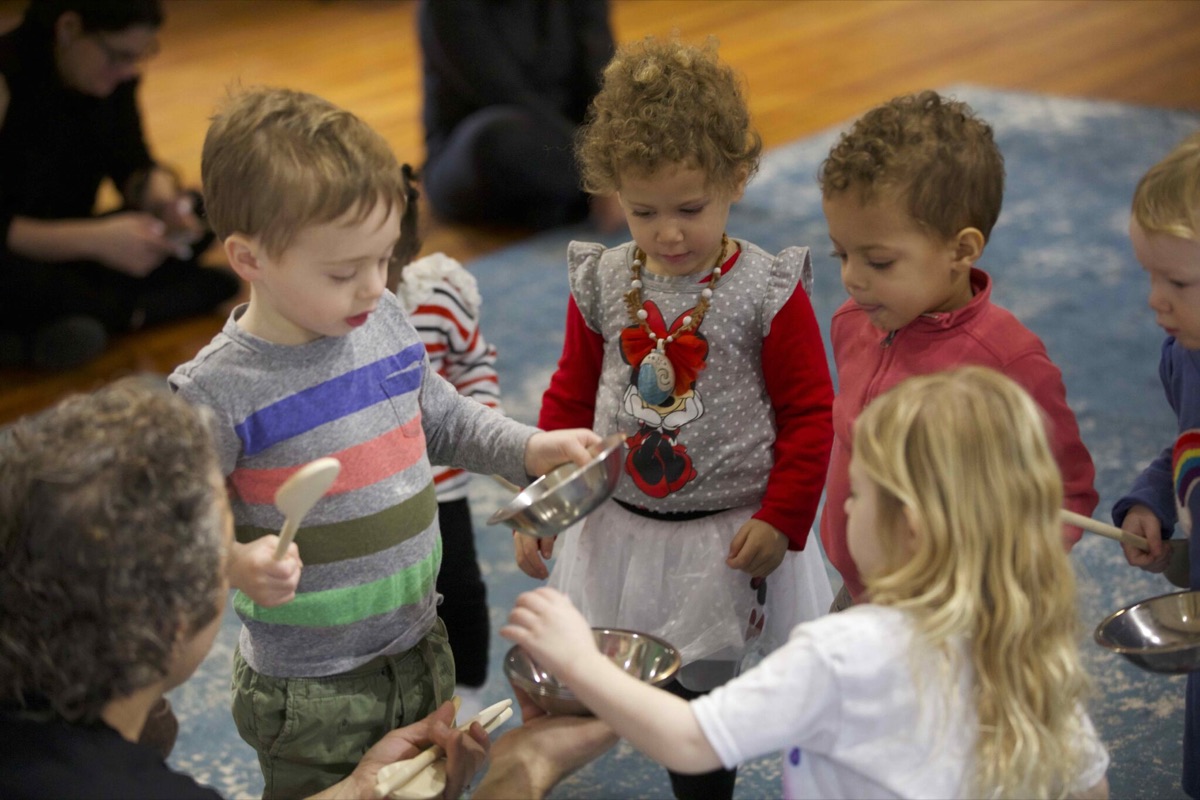
A shaker is sound, yes. It’s also weight, temperature, a rattle against the palm, something that changes when you tip it. A drum skin is bounce. A wooden block is dull thud. A metal bowl is bright and a little shocking. Little hands are collecting data.
Play researchers at NAEYC keep reminding families that open-ended play is how young kids learn. Instruments just happen to be toys that talk back. That’s why we leave time in class for exploration, not only for sitting in a perfect circle hitting together.
✋ Tip 1: Hands first, “playing it right” never
If I correct a toddler’s grip in the first thirty seconds, I’ve turned a discovery into a test. Let them mouth-safe objects (age-appropriate, no tiny parts), turn them over, roll them, ignore the beat entirely. I’ll join their tempo before I ask them to join mine.
At home, put one instrument on a towel and sit nearby. Don’t demonstrate unless they look at you. Your job is safety and company, not a tutorial.
🌈 Tip 2: Offer a tiny texture menu
You don’t need a full percussion closet. Three different feels is a feast:
- Soft / swish: a scarf, a rain stick, a shekere’s beads
- Skin / bounce: a hand drum or even a sturdy upturned mixing bowl
- Hard / click: wooden spoons, claves, a small wood block
If you like making stuff together, that’s a cousin of this (see homemade instruments with toddlers). Sensory play is the other half: not building the tool, getting to know it.
🔉 Tip 3: Let them be the volume knob
Some kids cover their ears. That’s information, not a problem. I go quieter, or I switch to a scarf so there’s movement without a crash. Other kids want the boom. I give them a drum and a “soft hits” game so they still have control.
Volume is a sensory input you can turn. Teaching a child they can make it quieter is as useful as teaching them they can make it louder. We practice that same start-and-stop in weekly classes, because it shows up later as listening, not just as noise.
🧺 Tip 4: A five-minute “instrument basket” at home
Keep a low basket with two or three safe sound-makers. Bring it out when the afternoon gets sticky, the same way you’d bring out play dough. Time-box it if you need to (a song’s length is a great timer). Then it goes away, so it stays special.
Winter indoor days are perfect for this. If you want more small-space ideas that aren’t all instruments, indoor winter activities for babies pairs well with a basket session.
🧠 What’s growing while it looks like mess
Under the beads and bangs:
- Fine motor: pinching, tipping, palming
- Body awareness: how hard is too hard
- Focus: one object, longer than you thought they could last
- Language later: we name “loud,” “soft,” “scratchy,” “smooth” when they’re ready
Birthdays and parties get this too, in a bigger, louder way. If you ever want that energy without running the sensory show yourself, we come to you for kids’ birthday entertainment. Class is the gentler weekly version, with time to poke the beads.
That little one with the shekere? A few weeks later she shook it on purpose, once, on the chorus, then went back to studying a single bead. I cheered both. The point isn’t a performance. It’s play, with a soundtrack they can feel in their hands.
👉 Want a room full of real instruments and zero pressure to “play them right”? Find a Rockness class, or read more about what toddler music class is actually for.
See you on the rug,
Mr. Michael 🎸
Rockness Music
Quick answers
What is instrument-based sensory play?
It’s letting a child explore how an instrument feels, looks, and sounds with their hands: beads, drum skins, wood, metal, vibration. The “song” is optional. The noticing is the work.
Are loud instruments too much for babies and toddlers?
Volume can be a lot, so start soft and let them control it. A gentle shaker or a hand on a drum is plenty. If they cover their ears, you go quieter. That’s listening, not a fail.
How is this different from making homemade instruments?
Homemade instruments are a craft. Sensory play is exploration of an object that’s already in the room. You can do both. One is building a tool. The other is getting to know it with your hands.