
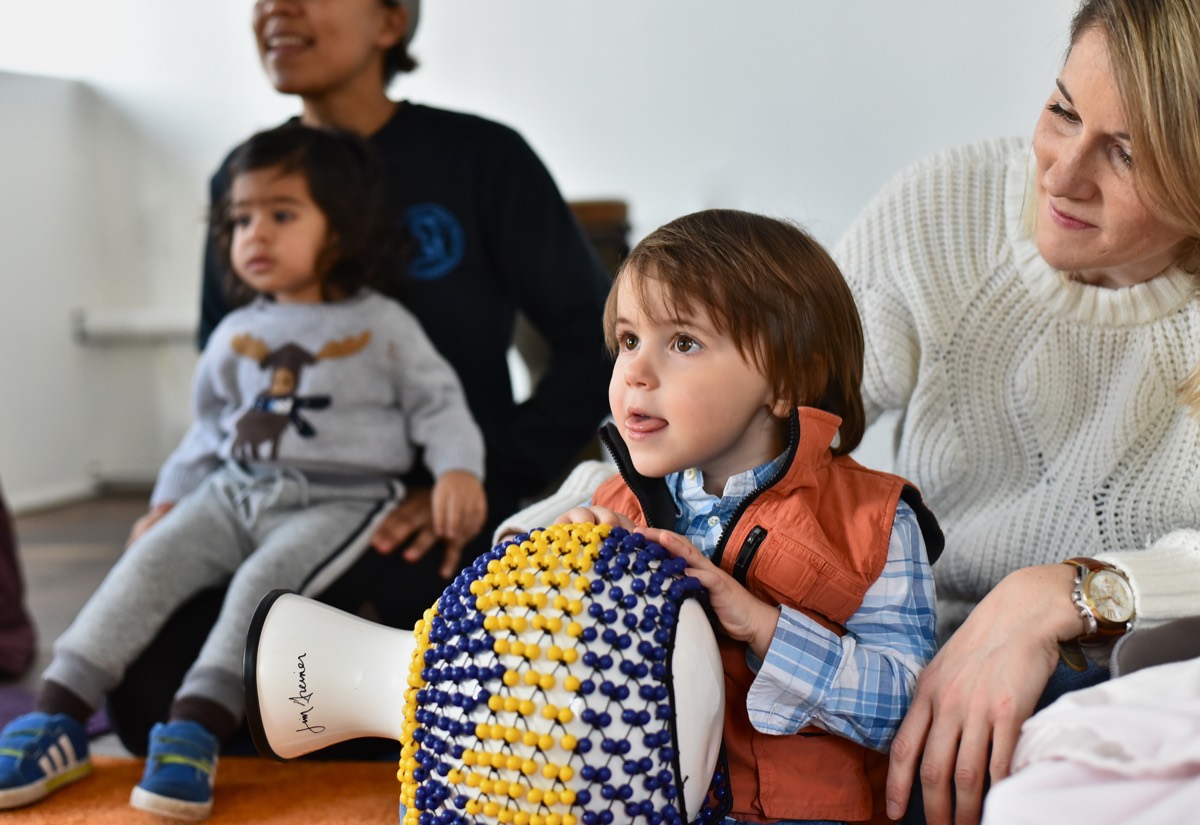
Easy Homemade Instruments to Make With Your Toddler
Confession time: some of the best “instruments” I’ve ever heard in a kids’ music class did not come from a catalog. They came from a kitchen. A recycling bin. A parent who said, “We have ten minutes and a cardboard tube. Go.”
Homemade instruments are not a downgrade from “real” music. They’re how kids learn that sound is something they can make, not just something that comes out of a speaker. And if your living room turns into a toddler mosh pit for fifteen minutes? That’s not a mess. That’s a rehearsal.
🫙 1. The sealed-bottle shaker (classic for a reason)
You’ll need: a clean plastic bottle or spice jar, dry rice or beans, strong tape.
- Fill about a third of the way (less = softer; more = chunkier)
- Screw the lid on tight
- Tape the lid like you mean it. Toddlers are escape artists.
- Optional: stickers on the outside so it feels “theirs”
Play along to any song with a clear beat. Shake on the chorus. Freeze on the quiet parts. You’ve just invented dynamics class.
🥁 2. Oatmeal-tub drum (plus wooden-spoon sticks)
Empty cylindrical containers are basically starter toms. Put the lid back on. Hand over a wooden spoon. Boom: drum kit.
Pro tip from the classroom: soft hits first. If you start at maximum volume, everyone ends up in the hallway. Build a game (loud/soft, fast/slow) so the drum teaches listening, not just volume.
For more indoor energy-burners that don’t require a craft store, see our ideas for indoor activities for preschoolers.
🌧️ 3. Cardboard rain stick (slow magic)
You’ll need: a paper towel tube, aluminum foil, dry rice, tape, paper to seal the ends.
- Twist a long foil “snake” and coil it loosely inside the tube
- Seal one end, pour in a small handful of rice, seal the other
- Tip slowly and listen for the rain
This one teaches patience. Toddlers who usually shake everything at light speed suddenly tip… wait… tip again. That pause is gold for self-regulation.
🛎️ 4. Pot-lid cymbals (use sparingly, love deeply)
Two lids. One glorious crash. I am not saying do this at 6 a.m. I am saying do this once, then put them away like sacred objects.
Make a rule: cymbals only when a song says “crash!” Structure keeps the joy and saves your neighbors.
🎸 5. Rubber-band guitar (shoebox edition)
Stretch a few rubber bands across an open shoebox or tissue box. Pluck. Different thicknesses = different pitches. It’s science and rock ’n’ roll in one recycled package.
PBS and early-childhood educators have long treated homemade sound-makers as legitimate learning tools. See PBS Parents’ homemade instruments ideas for more variations if you want to go deeper.
🧠 Why this matters more than the craft
Making instruments builds:
- Cause and effect: I shake, sound happens
- Fine motor skills: lids, stickers, careful pouring
- Shared attention: you and your kid in the same groove
- Rhythm body map: the same skills we feed in live class
Then, when they walk into a Rockness room and pick up a real shaker or drum, it feels familiar. The homemade kit was the rehearsal; the class is the band. 👉 Try a music class and bring the same playful energy. No audition required.
✅ Safety + sanity checklist
- Seal fillings; no loose beans for mouths under three
- Skip glass
- Tape check every session
- Play together. Unsupervised “band practice” is how remotes become drumsticks
- Have an end cue (“last song!”) so the jam doesn’t last until bedtime
You don’t need a music store to raise a musical kid. You need cardboard, curiosity, and a grown-up willing to look a little silly.
Now go make some beautiful noise, then come make some with us.
👉 Find a class near you · Or book a birthday that actually rocks
See you in the (homemade) pit,
Mr. Michael 🎸
Rockness Music
Quick answers
What household items make good toddler instruments?
Dry-bean shakers in sealed bottles, oatmeal-tub drums, pot-lid cymbals, and cardboard rain sticks are classics. Supervise small parts, tape lids shut, and keep anything breakable out of the mix.
Are homemade instruments safe for toddlers?
They can be, if you seal fillings, avoid choking hazards, and play together. Skip glass, skip tiny beads for under-threes, and check tape regularly. Grown-up presence is part of the instrument.
How do homemade instruments help development?
They build rhythm, fine motor skills, cause-and-effect learning, and shared attention, all while burning energy indoors. Making the instrument is half the learning; playing it together is the other half.