How Music Builds Language & Literacy Skills in Babies and Toddlers
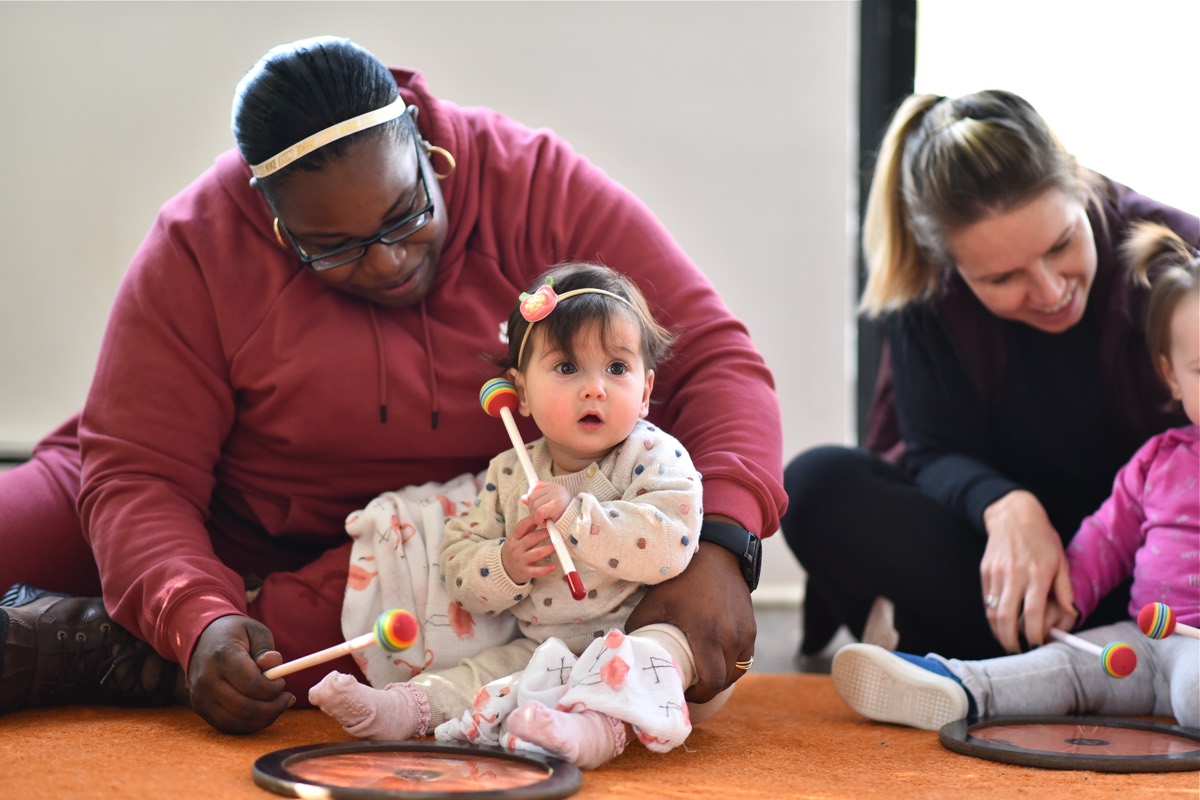
Here’s a scene I see almost every week. A baby who barely has two words yet is sitting on a caregiver’s lap. I start a call-and-response chant, something simple, like “ba-ba-ba” on a beat. Suddenly that baby’s mouth is moving. Eyes light up. They’re not “performing.” They’re practicing language the way humans have always practiced it: through rhythm, repetition, and joy.
Music isn’t a side dish to early language. It’s one of the main courses. And you don’t need a degree in speech therapy to use it. You need a few songs, a little silliness, and permission to sound ridiculous.
🎶 Why songs stick when spoken words fly by
Spoken conversation moves fast. Songs stretch words out. They put stress on syllables. They repeat the same phrase until a little brain can catch it. That’s gold for babies and toddlers who are still sorting out where one word ends and the next begins.
Researchers have long connected early musical play with stronger auditory processing (the skill of hearing fine differences in sound), which supports later reading and language. A good starting point for parents is the overview from NPR’s coverage of music and the developing brain.
In class, I don’t need a research paper taped to the wall to see it. When we slow a lyric down and clap each syllable of a child’s name (“Ma-ya! Ja-cob!”), faces change. Kids lean in. They’re hearing themselves as music.
🗣️ Call-and-response is conversation practice
A huge piece of language isn’t vocabulary lists. It’s turn-taking. I sing a line. You (or your toddler) answer. That back-and-forth is conversation in training wheels.
I’ve watched quiet toddlers who barely spoke at drop-off become the kids who shout the “answer” line three weeks later. Not because I drilled them. Because the song made answering feel like play. If you’re looking for a class rhythm that builds this muscle, our baby and toddler music classes are built around exactly that kind of shared call-and-response.
📚 Rhymes, rhythm, and early literacy (without flash cards)
Phonological awareness (hearing the sounds inside words) is a big predictor of reading readiness. Nursery rhymes and rhythmic songs are basically phonological awareness in disguise.
At home, try:
- Name songs: sing your child’s name with claps for each syllable
- Same song, many days: repetition is the feature, not a bug
- Silly sound swaps: “Twinkle twinkle little… car?” Kids crack up and listen harder
- Book + song: after a board book, sing one line about what you just saw
None of this requires perfect pitch. If I can belt Purple People Eater with a room full of toddlers and still call it literacy support, you’re going to be fine.
🧠 What I notice in the room after 15 years
Kids who get lots of shared singing tend to:
- Babble more musically (longer strings of sound, clearer turn-taking)
- Anticipate song endings and fill in the blank
- Use gestures and sound together: pointing, signing, “more!”
- Stay regulated longer in group listening (which helps everyone learn)
Is music a magic cure for every language concern? No. If a pediatrician or specialist recommends evaluation, follow that path. Music can still be a warm, low-pressure place to practice listening and sound play while you do the right clinical things. For the bigger “why music belongs in early childhood” picture, I wrote more in why music matters in early childhood education.
🏠 Five-minute language-through-music routine
- Pick one song for the week (not twelve playlists)
- Sing it during the same daily moment (diaper change, car seat, bath)
- Leave a pause so your child can fill a sound or gesture
- Celebrate any attempt. A grunt counts.
- Once a week, bring that energy to a live class so they hear other voices too
👉 Ready to try it with a real band and a room full of friends? Find a Rockness class near you or peek at tips for your baby’s first music class.
Language grows in relationship. Music is one of the sweetest relationships we get to have with our kids: loud enough to feel, soft enough to love.
See you in the circle,
Mr. Michael 🎸
Rockness Music
Quick answers
How does music help babies learn language?
Songs slow speech into clear syllables, pitch, and rhythm: the same building blocks babies use when they learn to hear and produce words. Shared singing also creates turn-taking, which looks a lot like conversation.
What musical activities support early literacy at home?
Sing the same short songs often, clap syllables in names, make up silly rhymes, and narrate routines with a little melody. Consistency beats perfection. Five joyful minutes beats a perfect playlist you never use.
Do music classes help with language delays?
Music is not a substitute for evaluation or therapy when a professional recommends it. It is a low-pressure way to practice listening, turn-taking, and sound play: skills that support language growth for many kids.