
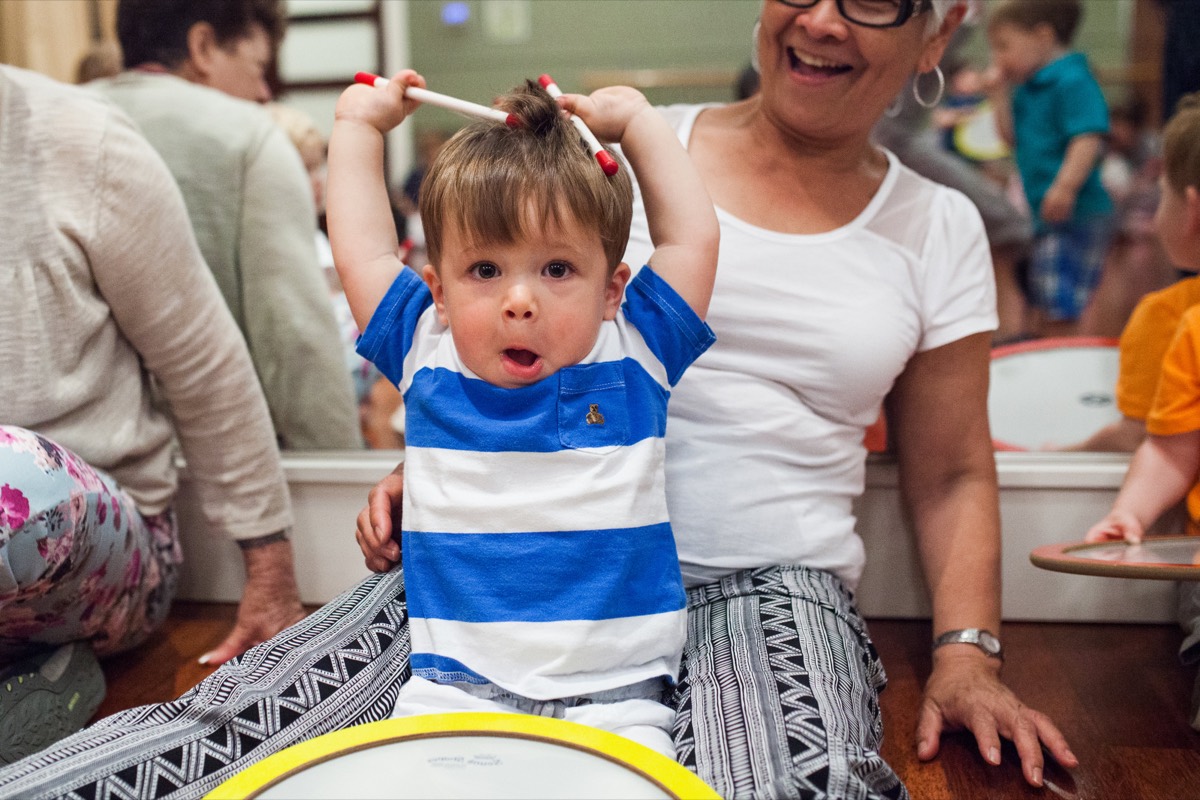
Signs Your Toddler Is Ready for Their First Music Class
Parents ask me this all the time, usually while bouncing a toddler who is either (a) drumming on a snack container or (b) hiding behind a leg: “Is my kid ready for music class… or are we going to melt down in the doorway?”
Honest answer from 15 years in the circle: readiness is less about a birthday and more about a few everyday signs. And “ready” does not mean “will sit perfectly and clap on beat.” If that were the bar, half of us adults would fail.
Most kids seem hesitant when they walk into something new. That is normal. It usually takes a few visits and a little consistency before they look “into it.” Week one can be all watching from your lap. Week three might be the sprint to the drum. We plan for that arc on purpose.
🥁 Sign 1: They’re already making music (whether they know it or not)
Banging pots. Humming in the car. Shaking a rattle like it owes them money. Dancing when a commercial jingle hits. That’s readiness.
I once had a two-year-old whose parent apologized because “all he does is bang.” Ten minutes later he was the groove section of the whole room. Pot-banging is rhythm practice with free instruments. We’re not mad about it. We’re hiring him.
👀 Sign 2: Curiosity beats perfection
Ready toddlers often watch first. They stand at the edge. They stare at the guitar. They don’t jump into the parachute on week one, and that’s fine.
Curiosity looks like:
- Stopping mid-play when they hear live sound
- Pointing at instruments
- Copying a clap or a bounce a few seconds later
- Wanting to “help” with the bag of shakers
If your child notices music in the world, a class gives that noticing a home. For what those first visits feel like from the caregiver side, read preparing for your baby’s first music class. A lot of it still applies to toddlers.
🫶 Sign 3: They can handle short group energy (with you there)
You don’t need a toddler who loves strangers. You need a toddler who can be in a room with other kids while attached to you for a short stretch.
Good signs:
- They’ve done library storytime, a playground visit, or a relative’s house without total shutdown every time
- They can rebound after a cry with a hug and a reset
- You’re willing to stay present (phones down. I mean it)
The Zero to Three guidance on early communication and social learning keeps landing on the same idea we live in class: kids grow skills in warm, responsive relationships, not in forced independence on day one.
🚫 What “not ready yet” can look like (without shame)
Sometimes the timing is off: illness season, a new sibling, a sleep regression that has everyone operating on fumes. Sometimes a child needs a quieter entry: arrive early, sit farther back, try a drop-in first.
“Not this week” is not failure. It’s parenting with ears on. Come back when the tank is fuller. Our trial and drop-in options exist so you don’t have to guess with a full commitment.
✅ A quick ready-or-not checklist
- Does your toddler move, hum, bang, or dance to music at home?
- Can you stay for class as their safe base?
- Are you okay if week one is mostly watching?
- Can you try one session without treating it like an audition?
If you nodded at most of those, you’re ready enough. Your toddler probably is too.
🎸 What happens when you show up anyway
I’ve watched kids cry for three weeks and then sprint to the drum on week four. I’ve watched “shy” toddlers become the ones who request songs by name. Perseverance from the grown-up is the secret sauce, not talent.
👉 Want to test the waters? Find a class near you, or start with a Grown Up & Me vibe where you stay right in the mix.
Ready doesn’t mean polished. Ready means curious, and accompanied by someone who believes they belong in the song.
See you in the circle,
Mr. Michael 🎸
Rockness Music
Quick answers
What age should toddlers start music class?
Many families start in babyhood; toddler classes usually fit kids who can sit with a grown-up, move a little, and handle a short group experience. Readiness is more about curiosity and regulation than a magic birthday.
What if my toddler cries at the first music class?
Crying is common and often temporary. Give them time to observe, stand and walk if needed, and try a drop-in or trial before committing. Consistency over a few weeks helps most kids settle.
How do I know if music class is a good fit?
Look for interest in sound, movement, or copying songs at home, plus a grown-up who can stay present. If your child lights up at music even from the edge of the room, that’s a strong signal.