Preparing for Your Baby’s First Music Class With Rockness Music
In our children’s music classes, there’s a reason we offer drop-in and trial class options. This way, you can attend your baby’s first music class with no obligation and see if it’s right for your family.
That experience can go one of two ways. Parents and caregivers need to commit and also expect the unexpected when they go to a class. Things can always go in a direction you may not have expected. Furthermore, this isn’t exclusive to kid’s music classes. It can be a gym class, science class, dance class—anything new.
Try a Drop-In or Trial Class First
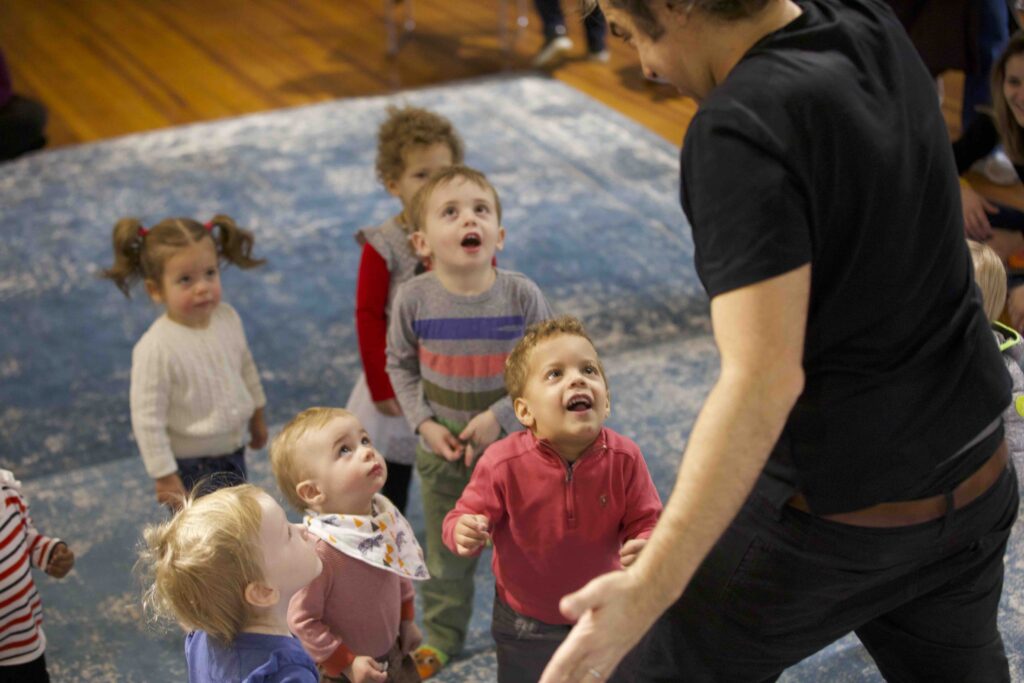
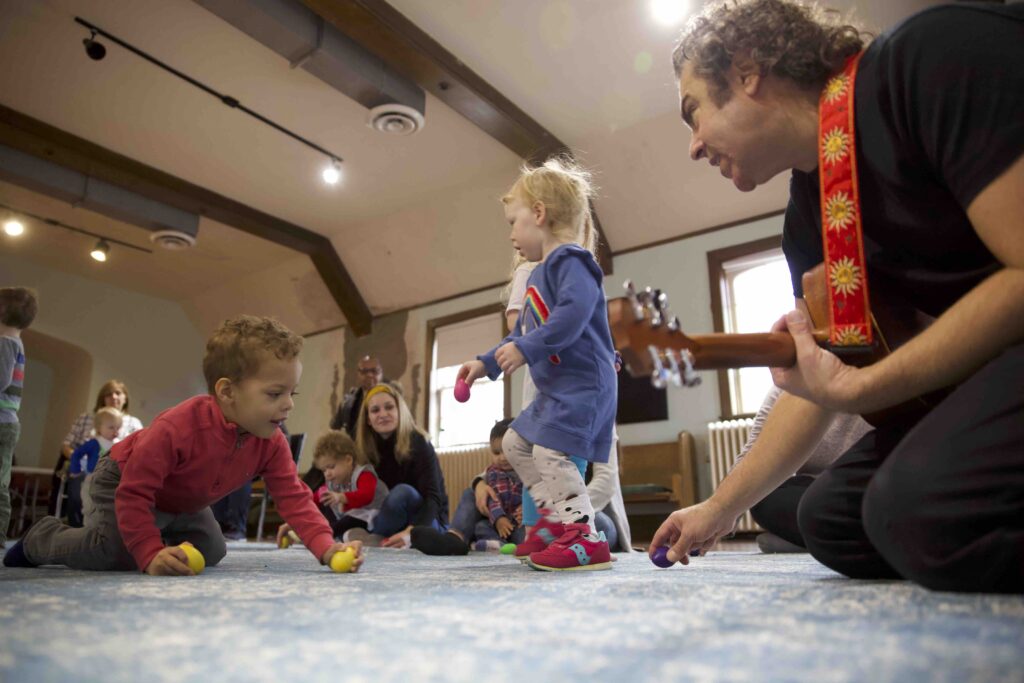
In fact, I’d say about 50% of babies (especially if they aren’t exposed to music or louder sounds at home) may react with tears when they first hear a guitar. It’s an interesting sound, and it can be surprising. So, they might cry.
Preparing for Your Baby’s First Music Class: What to Expect
Also, with babies, it can feel like a guessing game. Are they hungry? Do they have gas? Are they tired? Are they teething? At various ages, we don’t always know what’s wrong until they’re verbal. We guess—and we get pretty good at it.
So, you have to expect that when you come in, your baby might not be “perfect,” and that’s okay. Try to settle yourself and remember this: you hear your own child’s crying louder than everyone else does. Most families in the room understand, and the environment is supportive.
Preparing for Your Baby’s First Music Class: Helpful Tips Before You Arrive
Don't Be Late
When you go to class, get there early. Don’t rush. Make it calm for your child before you arrive. And if your child does cry, give it a second. Allow the tears to happen. Stand up if you want and walk around. Eventually, come back and rejoin the group. In my experience your child will settle in. Consequently, if they do not, excuse yourself with a little wave and a smile and return another time.
Phones Are a Huge Distraction
Also, phones are a huge distraction. You can check out my other blog about cell phone usage before and after class, and what I’ve seen over 15 years of teaching. According to the World Health Organization, “children under five must spend less time sitting watching screens…if they are to grow up healthy”.
So, try to put the phone away and really embrace the moment. Take a minute to notice the nuances of the children’s reactions to that various sounds, instruments and activities. The closer you pay attention the more magic you will reveal. In essence, this is Rockness Music.
Snacks, Sippy Cups, and Focus
A couple more things: if your child is eating and has food in their mouth, that sensation makes it harder to learn and focus. They’re concentrating on chewing and on the music. Flavor is amazing, and it can easily distract them from the lesson. So, we don’t really encourage snacks during class.
Furthermore, much like watching TV, when being entertained and eating one tends to eat blindly, which in turn promotes bad eating habits.
If you bring water or a sippy cup, that’s great. Just keep it out of reach of other children. That advice honestly applies to any class.
Older Toddlers May Need a Different Warm-Up
Then there are older children, the ones who start to get skittish because they realize what’s happening. Once they’re over one, they start thinking, “Hold on—what is happening here?” They recognize more, and they see things from a new perspective. They start questioning again.
As well as that, if they have not been to a kids music class before they might find it to be a bit overwhelming. New experiences can be excruciatingly difficutl for both the caregiver and child. Therefore, it’s ok to take it slow. Dr. Mona Amin has more to say about it here.
The Puppet Phase (and When It Changes)
In my experience, some kids don’t like puppets at certain ages. I’m laughing as I write this, because I’m thinking about all the times I’ve used a puppet with a two-year-old and they’re like, “Nope.” It’s more common around age two or two-and-a-half when some children start to question them. They sit back, and start from a distance when six months prior they were hugging that same puppet.
I loved the perspective of Mayim Bialik (the host of the podcast Jeopardy) when discussing her child’s abhorrent dislike of purim puppetry in this article on Kveller.
Why Some Crying Kids Become the Biggest Fans
Regardless, there are also kids who are older than babies who come in crying. In many ways, those can be easier to help engage in music. There are usually a few reasons. One is that the child hasn’t been in a class or program like this before. Another strangly common reason is that the teacher is male, and the child doesn’t spend a lot of time around men. I am quite surprised when families say this to me often.
Either way, children need time to ease in. I’ll say this: around 90% of babies, toddlers, and preschoolers who come into my classes crying and kicking—even for weeks—often turn into my biggest fans. By “fan,” I mean they become comfortable, connected, and excited to participate. Perseverance from the parent or caregiver means everything.
I’ve seen it go both ways. I’ve seen caregivers give up and leave after five minutes. And I’ve seen families stay consistent for three or four weeks, until the child suddenly wants to be my best friend.
So, what I’m saying is: give your child a chance to walk into music class and enjoy it. Prepare yourself for the adjustment period.
Some Closure For Parents With Many Questinos
Give your child a chance to walk into music class and enjoy it. Prepare yourself for the adjustment period.
Hey, listen, I’m just trying to keep it real for you parents. Don’t worry. These kids are super pliable, and we just want to do the right things—point them in the right direction and start them out on a good foot. Less screens, more love, more music… and more Rockness Music.


Michael Napolitano
Michael Napolitano is an award-winning early childhood music educator, performer, and founder of Rockness Music and Michael & the Rockness Monsters.